Internship Overview
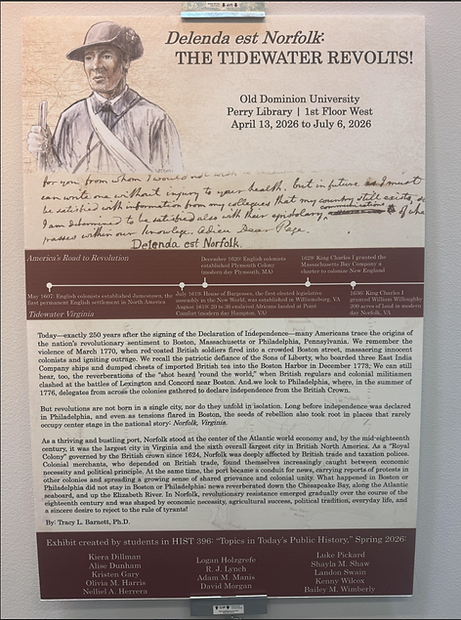
This work-based learning experience follows the 250th Exhibit assignment outlined in the public history course. Working with the History department and the Monarch Internship Humanities Academy (MICO) students will collaboratively research, design, and produce a public humanities exhibit on Virginia’s commemoration of the 250th anniversary of the Declaration of Independence and its legacies. The final exhibit will be installed in ODU’s Perry Library on April 13, 2026. This exhibit will be part of the campus’s 250th commemorations as well as Perry Library’s “50 & Forward” campaign.
Main Project
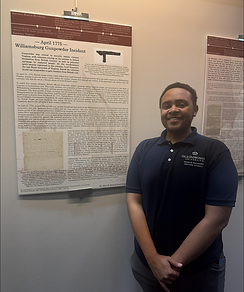
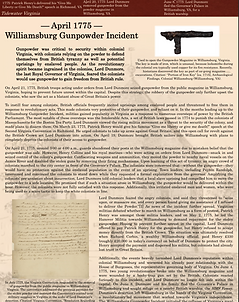
In my public history course, my group designed a public history panel for Virginia’s 250th anniversary celebration that focused on the Gunpowder Incident of 1775, when Lord Dunmore removed gunpowder from the Powder Magazine and angered the colonists. My role was to work with my partner to find an artifact and a primary document connected to the incident, as well as gather additional information from primary and secondary sources for the panel. Through this project, I learned how the Gunpowder Incident helped shape Virginia’s resistance to British authority and its journey toward independence, while also gaining experience with historical research and presenting information clearly for the public.
Additional Experience
In my public history course, I collaborated with classmates to design a promotional flyer for an exhibition, enhancing my graphic design skills. I learned how to effectively promote a historical exhibit using clear titles, engaging descriptions, images, and location details to attract visitors.

Internship Reflection
Through my internship experience, I learned about several different career paths within public history. Before this experience, I mostly connected public history with museums, but I now understand that the field also includes libraries, historic homes, churches, archives, historic sites, and educational programs. I also learned that public historians can work in private, state-funded, or federally funded institutions. This became clear through the different speakers who came to the class, including professionals from historic homes, churches such as St. Luke’s, federally funded museums such as the Naval History Museum in Norfolk, and living history sites such as Colonial Williamsburg.
The internship also gave me valuable networking opportunities by allowing me to meet professionals from different areas of public history. These connections are important because they helped me better understand the variety of roles available in the field and the skills needed for each career path. For example, Colonial Williamsburg discussed how they create educational programs for younger audiences and align them with local public school institutions. This showed me that public history is not only about preserving the past, but also about making history accessible, educational, and meaningful for the public.
Final Thoughts
The most rewarding aspect of this experience was having the opportunity to help create a public history panel that is now on display for the public. Through this project, I was able to continue developing my exhibit production skills while contributing to a panel that will leave a lasting mark on the university. I hope the panel can also serve as an example for future students working with the history department.